Starlet X Dance Curriculum — Stage 1
Adult edition. Beginners to advanced.
Compiled from studio notes · Starlet X Libraries · part of Emy Mac Music © 2025
3 reads on this story · 18 reads in the library
Adult edition of Stage 1. A practical curriculum of technique, culture, and fusion for adult learners and community teachers.
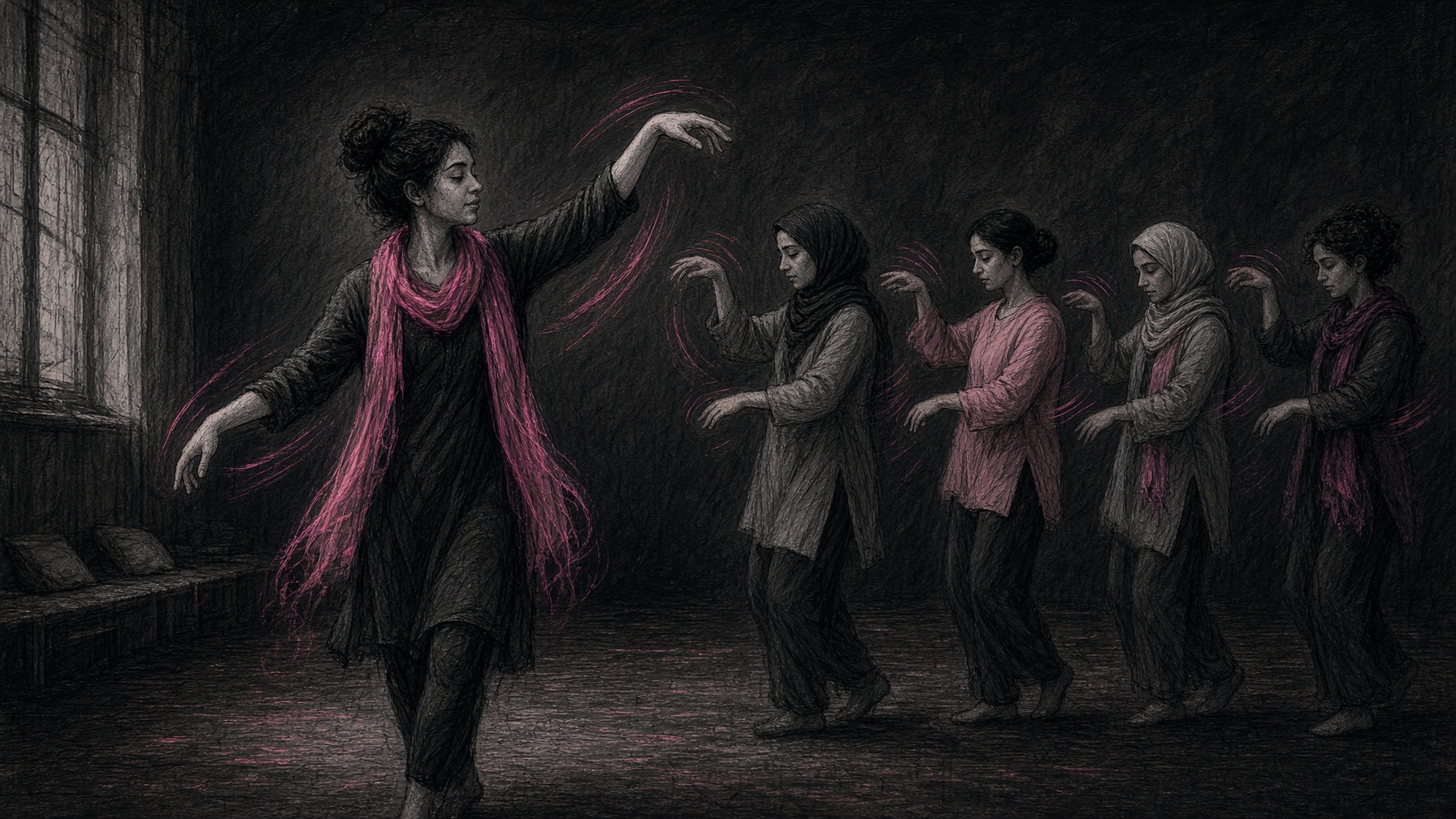
A library learning companion compiled from studio notes on ballet, street dance, R&B, Nubian and Egyptian traditions, 1990s pop, and themed fusion routines.
Practice safely. Warm up before every session. Work at your own level. A teacher is the best guide for alignment and injury prevention.
How to Use This Book
Contents
How to Use This Book. Safety First. Ballet Technique. Urban Forms. R&B Vocabulary. 1990s Popular Dance. Nubian Dance. Egyptian Imagery and Hathor. Fusion Pedagogy. A Six-Week Community Outline. Coaching Notes. Glossary.
This edition is written for adult learners, community teachers, and library patrons who want more than a list of trendy steps. Each chapter names the movement, explains the mechanical idea behind it, and offers a short phrase you can teach or self-coach.
Use 8-count phrasing. Teach shape before speed. Separate cultural context from theatrical adaptation so students know what is traditional, what is staged, and what is fusion.
- Adult beginners often have strength but limited ankle and hip mobility. Give extra time to plié, turnout from the hip, and calf preparation.
- Offer regressions: smaller range, slower tempo, no jumps, no neck rolls.
- Credit source communities when you teach Nubian or Egyptian-inspired work.
Safety First
Dance is athletic. Treat it that way.
- Warm up joints and raise heart rate for 8–10 minutes before technique.
- Land softly through the feet and bend the knees. Never lock joints on impact.
- Do not force turnout, splits, backbends, or flips. Flexibility is trained over months.
- Keep space clear of bags, glass, and shoppers if you are in a public place.
- Stop if you feel sharp pain. Soreness is normal. Sharp pain is a stop sign.
- Back arches, jumps, and floorwork need gradual progressions. No heroics on concrete.
Progressions for high-risk skills (back handsprings, headspins, extreme backbends) belong in a supervised studio, not a library workshop on a hard floor.
Ballet Technique
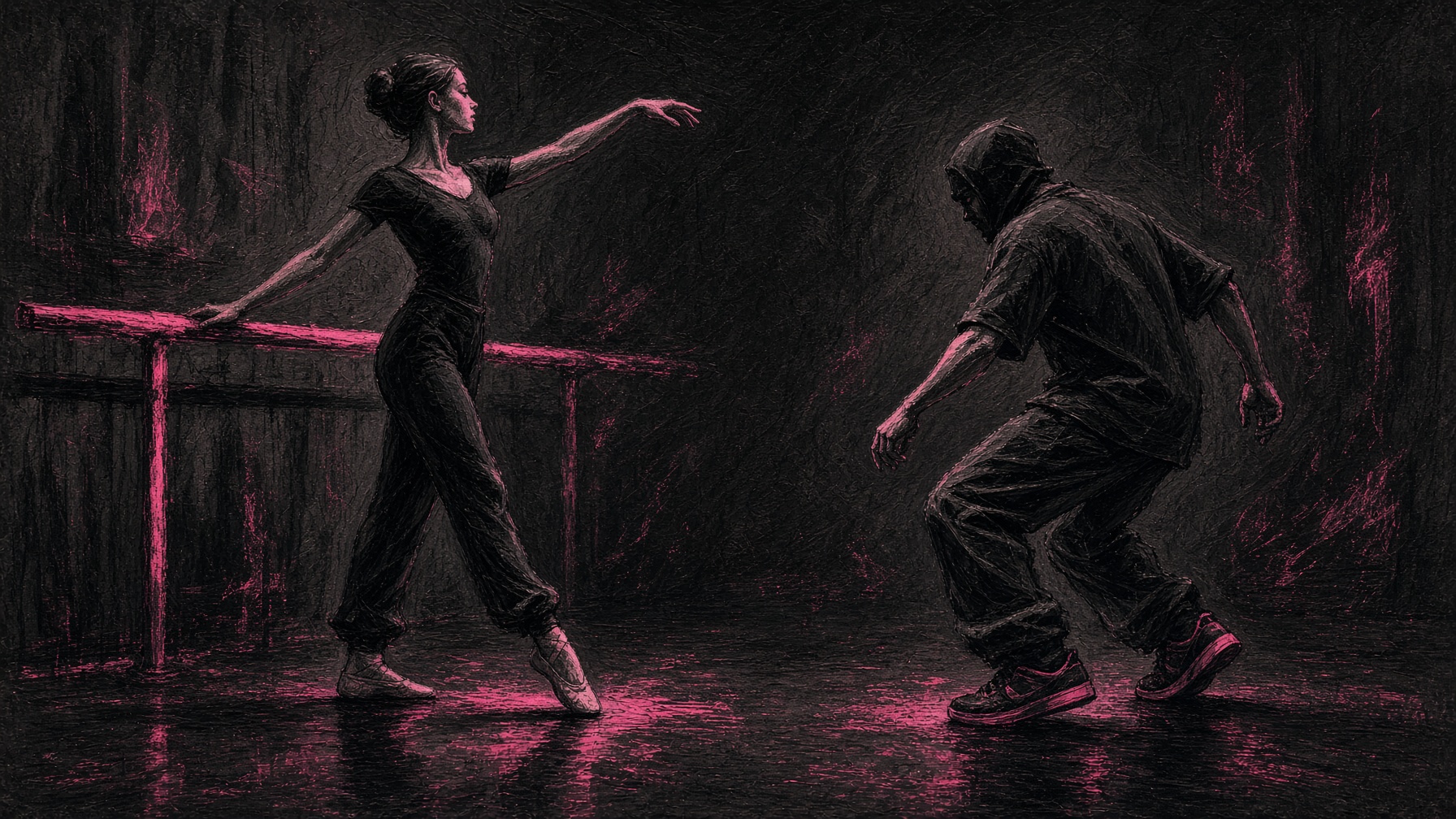
Ballet organizes the body around turnout, opposition, and a vertical axis. Even if your goal is street dance, these skills improve balance, foot articulation, and landings.
Alignment cues
- Weight over the whole foot, not the little toe.
- Knees track over the second toe in plié.
- Ribs stacked over pelvis. Do not flare the front ribs to fake a high chest.
- Neck long. Spotting is a head action, not a shoulder twist.
Barre building blocks
- Plié and relevé for shock absorption.
- Tendu and dégagé for foot strength.
- Rond de jambe and fondu for hip control.
- Frappé for speed. Grand battement for power without a collapsed torso.
- Développé and adagio for sustained line.
Turns
A pirouette is a coordinated rise, not a spin you throw. Prepare in plié, connect the passing foot to passé, hold the core, and spot. Chaînés travel. Piqué steps onto the relevé. Fouetté is an advanced vocabulary item — do not assign it as homework to beginners.
Allegro
Petit allegro trains rhythm in the feet: sauté, changement, échappé, jeté, assemblé, glissade, entrechat, pas de chat. Grand allegro (grand jeté, saut de chat, tour jeté) needs space and conditioned calves. Silk or ribbon effects are costume, not technique; the jump still has to land quietly.
Urban Forms
Hip-hop and new style
The foundation is groove: a consistent bounce that matches the drum. Isolations and body rolls sit on that bounce. Teaching order: bounce, rock, two-step, then freestyle combinations. Correct stiffness before you correct “cool.”
Krumping
Krump is a high-intensity street form built on chest pops, jabs, stomps, and expressive faces. Coach emotional honesty without encouraging unsafe collisions. Give students a “hit and recover” rule so joints are not slammed on every count.
Breaking
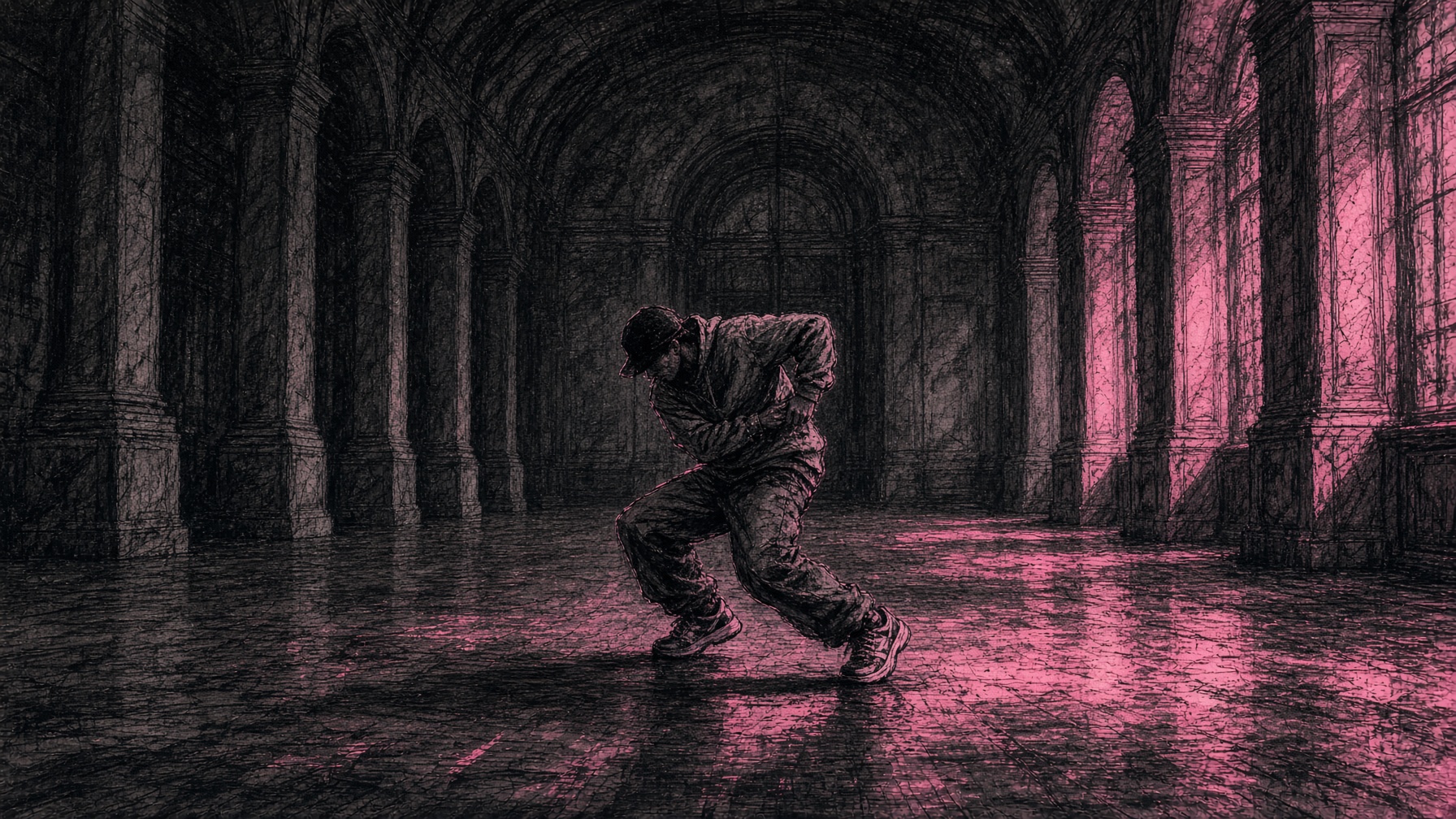
Structure classes around the four elements. Toprock and footwork develop musicality and wrist strength. Freezes need scapular stability. Power moves are a separate conditioning track. A low squat with one hand planted is a useful transitional shape between standing and floorwork.
R&B Vocabulary
R&B movement privileges continuity. The wave should travel. The hip circle should close. The chest pop should be an accent, not the whole sentence.
- Body wave / roll — sequential articulation of cervical, thoracic, and lumbar spine plus pelvis.
- Hip roll / wine — circular pelvic pathway; keep knees soft.
- Heel-toe and step-touch — foot articulation with hip punctuation.
- Two-step and groove walk — locomotion that keeps the pocket.
Site-specific notes
In a mall or other public site, reduce amplitude, keep pathways open, and treat the space as shared. The same 32-count phrase that works on a stage can be scaled down without losing musicality.
1990s Popular Dance
1990s pop choreography is a useful teaching tool because the motifs are short, countable, and socially familiar. Use it to train unison, spatial awareness, and performance face.
The Macarena is a 16-count arm phrase plus a hip wiggle and a quarter turn. Teach arms alone, then hips, then the turn. It is a line dance: the room rotates together.
Nubian Dance
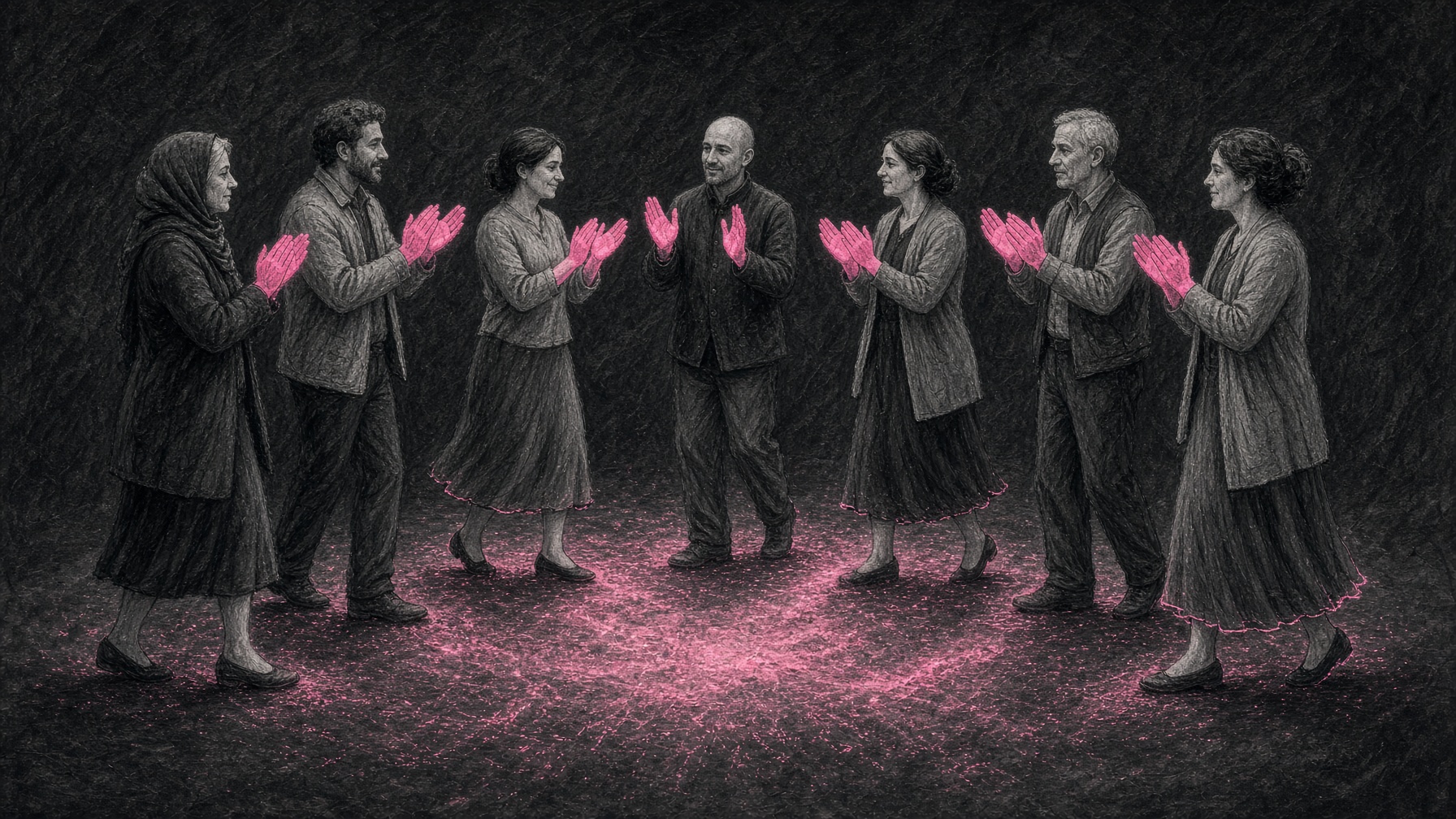
Nubian peoples historically lived along the Nile in what is now southern Egypt and northern Sudan. Village groups such as Kenzi and Fadija maintain related but distinct song-and-dance practices. Common features include mixed-gender group unison, clapping, a walking pulse, and relatively little isolated hip work compared with some other Egyptian folk forms.
- Foundational step: right foot steps on the beat; ball of the left foot articulates on the and-count.
- Arajid / Aragid includes clapping-line and longer wedding forms described in ethnographic notes as ollin and firry variants.
- Kirang is a high-energy communal celebration dance.
Mahmoud Reda’s theatrical Nubian suites adapted observed steps into stage formations. When you teach “Reda-style Nubian,” say so. Do not present staged patterns as village ritual.
Back arches and large torso waves may appear in contemporary fusion. Introduce them as optional theatrical color, not as required traditional vocabulary.
Egyptian Imagery and Hathor
Temple and tomb images associated with Hathor — goddess linked to music, joy, fertility, and dance — show raised arms, sistra, group formations, leaps, and extreme spinal flexibility. Reconstruction is interpretive. Use angular ports de bras, symmetrical groupings, and rhythmic percussion as historically grounded starting points. Treat splits, bridges, and acrobatic kicks as athletic possibilities suggested by art, not as a checklist of “authentic moves.”
Fusion Pedagogy
Fusion works when one rhythm language stays in charge. Examples from studio practice:
- R&B zombie: continuous waves interrupted by rigid timing, lagged head, and weighted steps.
- Demon krump: krump hits plus spiral torso and held grotesque shapes. Coach expression without strain of the cervical spine.
- 90s pop × Nubian: Nubian pulse and clap as the meter; 90s steps as the motif. Prefer lines and circles.
A reliable phrase architecture for adults: 8 counts locomotion, 8 isolations, 8 level change, 8 resolution (turn or freeze).
A Six-Week Community Outline
- Week 1 — posture, bounce, plié, and counting in 8s.
- Week 2 — ballet feet plus R&B wave.
- Week 3 — hip-hop two-step and a 32-count phrase.
- Week 4 — Nubian pulse and clap in lines.
- Week 5 — 90s unison or a themed fusion of the group’s choice.
- Week 6 — informal showing: one phrase, one cultural note spoken aloud.
Coaching Notes
- Name the body part that initiates. “Chest first” is a better cue than “more energy.”
- Adults often hold breath. Ask for an audible exhale on the landing or the hit.
- Give the cultural sentence before the combination when the material is not the students’ own tradition.
- End class standing. Dizzy turns and floorwork need a calm closer.
Glossary
- Turnout — rotating the legs from the hip so knees and toes face outward.
- Plié — a controlled bend of the knees.
- Relevé — rising onto the balls of the feet or pointe.
- Arabesque — standing on one leg with the other extended long behind.
- Pirouette — a controlled turn on one leg.
- Pas de chat — “step of the cat,” a light jump with both knees bent in the air.
- Isolation — moving one body part while the rest stays still.
- Groove — the bounce and pocket that keep street and R&B dancing musical.
- Toprock — standing steps that open a breaking set.
- Freeze — a held pose that punctuates a breaking phrase.
Technique is a kindness to the body. Context is a kindness to the source. Performance is optional. Practice is the book.