Starlet X Dance Curriculum — Stage 1
Teen edition. Beginners to advanced.
Compiled from studio notes · Starlet X Libraries · part of Emy Mac Music © 2025
3 reads on this story · 15 reads in the library
Teen edition of Stage 1. Dance styles you can learn, mix, and perform. Warm up first. A teacher is the best guide for alignment and injury prevention.
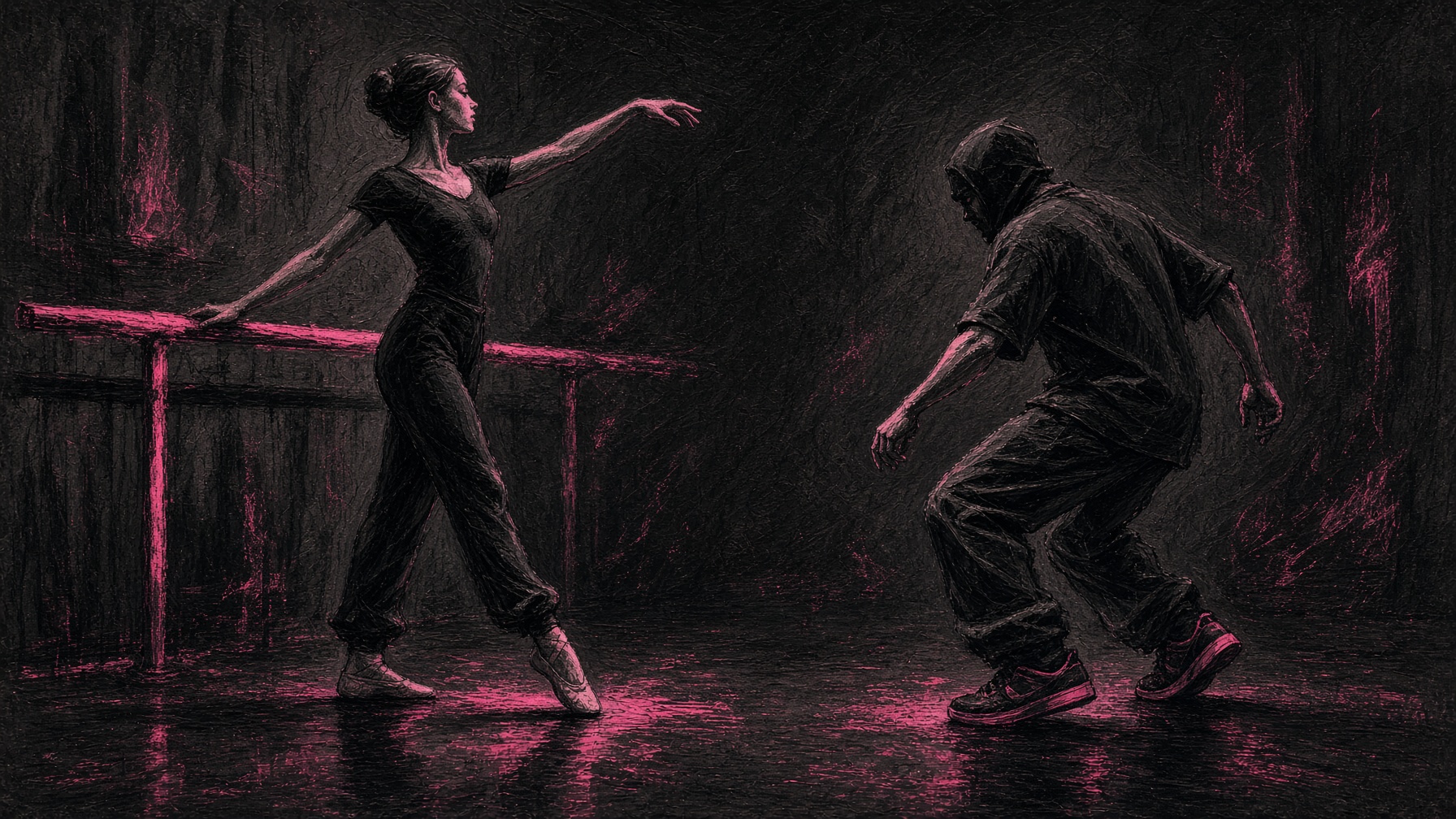
A library learning companion compiled from studio notes on ballet, street dance, R&B, Nubian and Egyptian traditions, 1990s pop, and themed fusion routines.
Practice safely. Warm up before every session. Work at your own level. A teacher is the best guide for alignment and injury prevention.
How to Use This Book
Contents
How to Use This Book. Safety First. Ballet Foundations. Street Dance Map. R&B and R&B Street. 1990s Pop. Nubian Dance. Ancient Egyptian and Hathor-Inspired Movement. Themed Fusions. Build Your Own Phrase. Practice Plan. Glossary.
This book is a studio notebook turned into a library guide. Each chapter gives you the name of a move, how it feels, and a short phrase you can practice. You do not need to master every style. Pick one chapter, learn three moves well, then mix.
Counts are written in 8s because most songs are built that way. Count out loud: 1-2-3-4-5-6-7-8.
- Learn the shape first. Add speed later.
- Film yourself from the side. You will spot posture faster than a mirror sometimes does.
- Respect cultures you borrow from. Nubian and Egyptian chapters are living traditions, not costumes.
Safety First
Dance is athletic. Treat it that way.
- Warm up joints and raise heart rate for 8–10 minutes before technique.
- Land softly through the feet and bend the knees. Never lock joints on impact.
- Do not force turnout, splits, backbends, or flips. Flexibility is trained over months.
- Keep space clear of bags, glass, and shoppers if you are in a public place.
- Stop if you feel sharp pain. Soreness is normal. Sharp pain is a stop sign.
- Back arches, jumps, and floorwork need gradual progressions. No heroics on concrete.
Ballet Foundations
Ballet is the grammar many other styles borrow. Turnout, pointed feet, and a lifted core make almost every later chapter cleaner.
The five positions
First: heels together, toes out. Second: feet apart, toes out. Third: one heel against the other arch. Fourth: one foot in front, space between. Fifth: feet fully crossed, heel to toe.
Everyday ballet moves
- Plié — melt the knees over the toes, then rise. Keep heels down in demi-plié.
- Tendu — brush the foot along the floor until it points.
- Relevé — rise high on the balls of the feet without sickling the ankle.
- Port de bras — arms draw clean half-circles. Soft elbows, live fingertips.
Next level
- Dégagé — a quick brush that leaves the floor by a few inches.
- Rond de jambe — the working foot draws a half-circle on the floor or in the air.
- Développé — unfold the leg from the knee to a long line.
- Arabesque — long back line. Square the hips as much as your body allows.
- Attitude — the lifted leg bends at about 90 degrees, still turned out.
Turns people call twirls
The classic ballet twirl is a pirouette: rise to relevé in passé (working foot at the supporting knee) and spot your head. Other turns: chaînés (fast traveling turns), piqué turns (step onto relevé and spin), fouetté turns (advanced whipped turns).
Jumps and hops
Petit allegro is small and quick: sauté, changement, échappé, assemblé, glissade, pas de chat. Grand allegro is big: grand jeté and saut de chat. Always plié before takeoff and on landing.
Pas de chat is the cat jump: one leg lifts to a bent passé, the other follows so both knees are up, then you land softly one foot after the other.
Street Dance Map
Hip-hop / new style
Start with bounce. If the knees do not give, the groove dies. Layer body rolls, two-steps, and simple isolations. Freestyle is the point: combinations should feel like talking, not reciting.
Krumping
Krumping is intense and aggressive in the best sense: chest pops, arm jabs, stomps, and big facial expression. It is a release, not a fight with your partner. Keep the hits sharp and the landings safe.
Breaking (breakdance)
Four families of movement: toprock (standing), footwork/downrock (floor circles such as the 6-step), power moves (windmill, backspin — advanced), and freezes (baby freeze, chair, turtle). Learn toprock and 6-step before any spinning on your head or back.
- Cross step — side-to-side crossing feet with swinging arms.
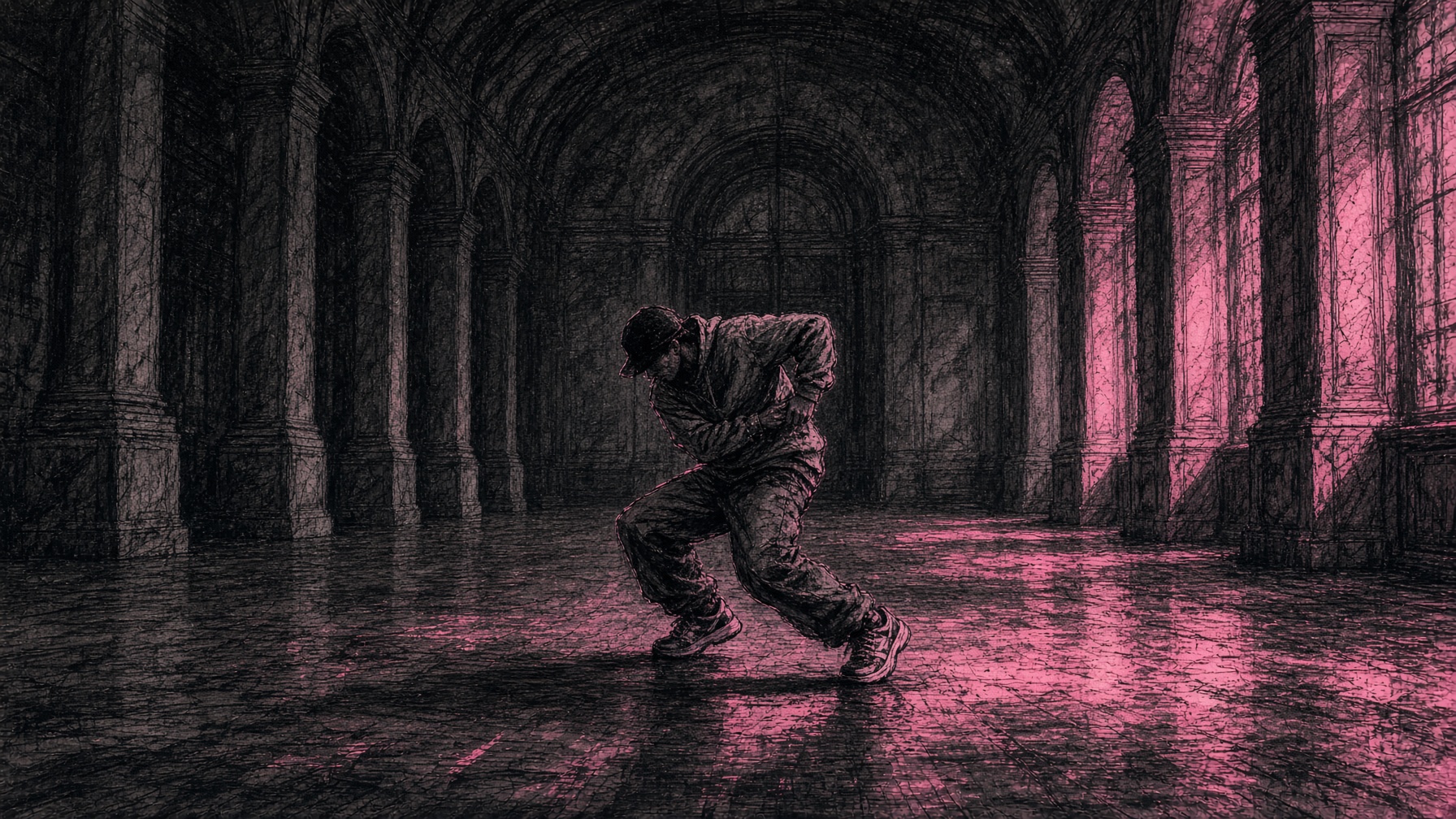
- Low squat pose — one hand on the floor, the other pointing or flexed. Good doorway into footwork.
R&B and R&B Street
R&B dancing is musical and controlled. Street R&B adds attitude and a lower stance without losing the smoothness.
- Body wave — ripple from head or chest through the hips.
- Hip roll or figure-8 — keep it fluid, not bouncy.
- Heel-toe / step-touch — playful footwork with hip hits.
- Chest pop — a small, clean isolation on the beat.
- Two-step groove walk — travel without rushing the pocket.
32-count street R&B phrase
- 1–8: two-step with soft waves and light chest pops.
- 9–16: stay put. Full wave, figure-8 hips, chest isolation, head tilt.
- 17–24: heel-toe travelling sideways with opening arm swipes.
- 25–32: bigger hip rolls into a low stylish freeze.
Mall or street tip: keep arms close, formations open, and volume respectful. Public dance is a gift, not a blockade.
1990s Pop
90s pop loves unison, clear counts, and big personality. Famous toolkit: Running Man, Roger Rabbit, Cabbage Patch, step-touches, and simple line-dance patterns such as the Macarena.
Macarena, move by move
- Right arm forward, palm down. Left arm forward, palm down.
- Flip right palm up. Flip left palm up.
- Right hand to left shoulder. Left hand to right shoulder.
- Right hand behind the head. Left hand behind the head.
- Right hand to right hip. Left hand to left hip.
- Hands to the sides of the hips or seat. Wiggle. Jump and turn a quarter left. Repeat.
Nubian Dance
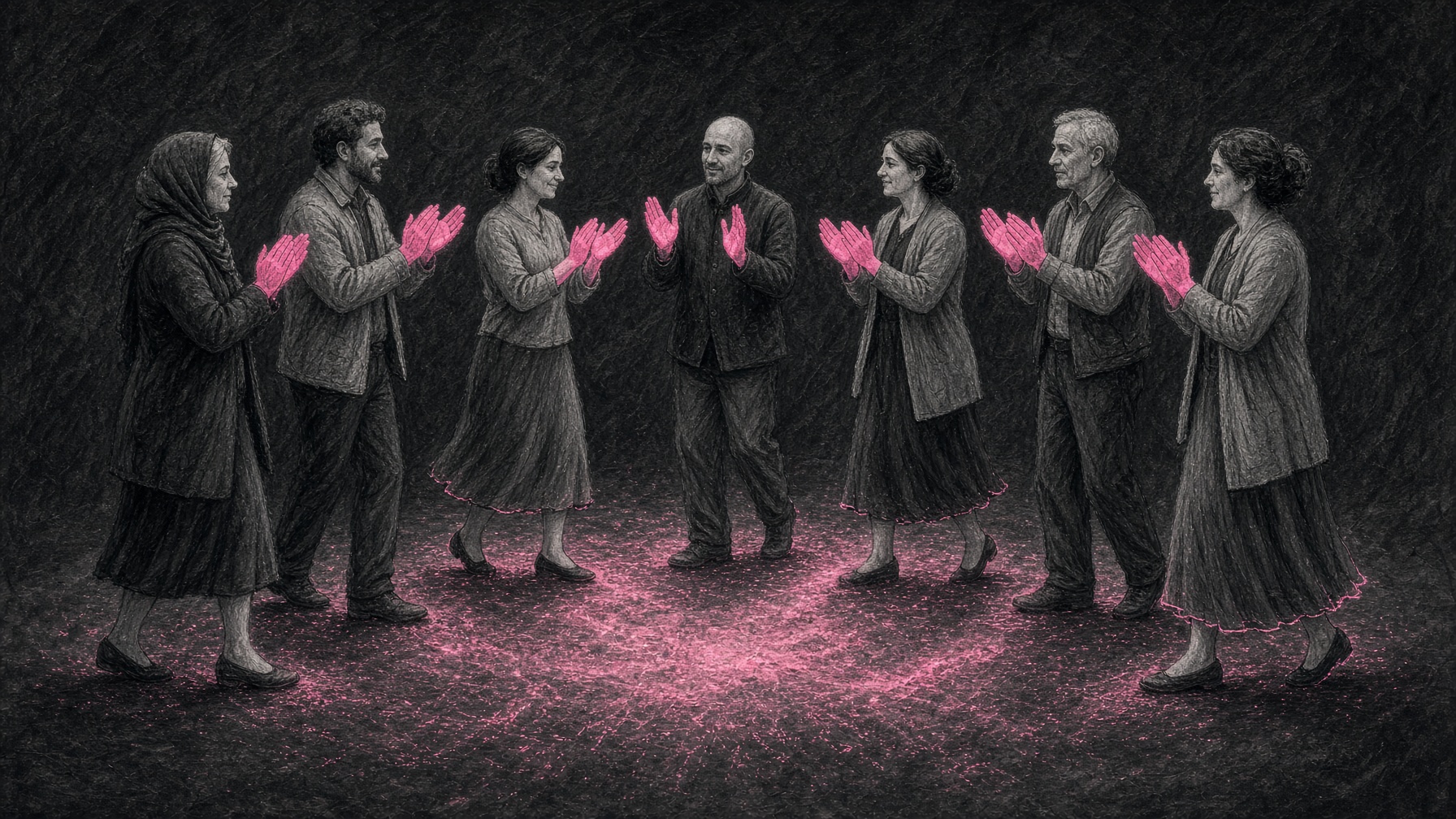
Nubian dance comes from communities along the Nile in southern Egypt and northern Sudan. It is mostly group dance: lines or circles, the same steps together, clapping, and joy. The foundational step is a walking pulse — right foot forward on the beat, ball of the left foot on the “and.” Arms stay symmetrical. Hips are not the main event.
- Arajid / Aragid — line or facing-line dance with stepping and clapping.
- Kirang — high-energy celebration dance for weddings and gatherings.
- Feri — playful fish-inspired motifs in some village traditions.
Modern stage versions sometimes add bigger torso waves or a careful back arch for drama. Traditional social dance stays simpler. Learn the pulse and the clap before you decorate.
Ancient Egyptian and Hathor-Inspired Movement
What we call Egyptian dance today is reconstructed from tomb art, temple reliefs, and later performance traditions. Hathor was a goddess of music, joy, and dance. Images show raised arms, angular poses, leaps, high kicks, and deep backbends.
- Angular arm raises, sometimes curved like horns.
- Group symmetry and mirrored shapes.
- Leaps, skips, and (in some depictions) splits or bridges.
Treat this chapter as inspiration, not a claim that any modern combo is “authentic temple choreography.” Honor the source with research and respect.
Themed Fusions
R&B zombie hip-hop
Mix smooth R&B waves with stiff, heavy zombie timing. Tighten the core. Let the head lag. Stomp more than you bounce. A 32-count sketch: zombie march with shoulder jerks; clawed arm pulses; a back-arch rise; sharp contractions melting into a wave.
Demon krump / possession groove
Use krump hits — chest pops, jabs, stomps — plus twisted torso shapes and sudden stills. Intensity is the costume. Keep landings safe.
90s pop tied to Nubian
Keep the Nubian walking pulse and claps. Drop 90s steps on top: Running Man with shoulder tilts, step-touch with symmetrical arm swipes, Roger Rabbit finished with an open Nubian port de bras. Circles and lines beat messy scatter formations.
Build Your Own Phrase
Pick one foundation (ballet line, Nubian pulse, or R&B groove). Add one accent family (krump hits, 90s arms, Egyptian angles). End with a freeze people can read from across a room.
- 8 counts travel.
- 8 counts stay and isolate.
- 8 counts change level (high to low or the reverse).
- 8 counts pose or turn.
Practice Plan
- Monday — ballet feet and balance, 20 minutes.
- Wednesday — groove and isolations, 20 minutes.
- Friday — one cultural or themed chapter plus a filmed 32-count.
Write what felt strong and what wobbled. That notebook is how dancers actually improve.
Glossary
- Turnout — rotating the legs from the hip so knees and toes face outward.
- Plié — a controlled bend of the knees.
- Relevé — rising onto the balls of the feet or pointe.
- Arabesque — standing on one leg with the other extended long behind.
- Pirouette — a controlled turn on one leg.
- Pas de chat — “step of the cat,” a light jump with both knees bent in the air.
- Isolation — moving one body part while the rest stays still.
- Groove — the bounce and pocket that keep street and R&B dancing musical.
- Toprock — standing steps that open a breaking set.
- Freeze — a held pose that punctuates a breaking phrase.
Keep calm and dance on. Technique first. Joy always.